
Plunge Pools in Houston: Cost Factors, Sizes & Is One Right for Your Yard?
By Action Custom Pools · Houston Pool & Outdoor Living Builder
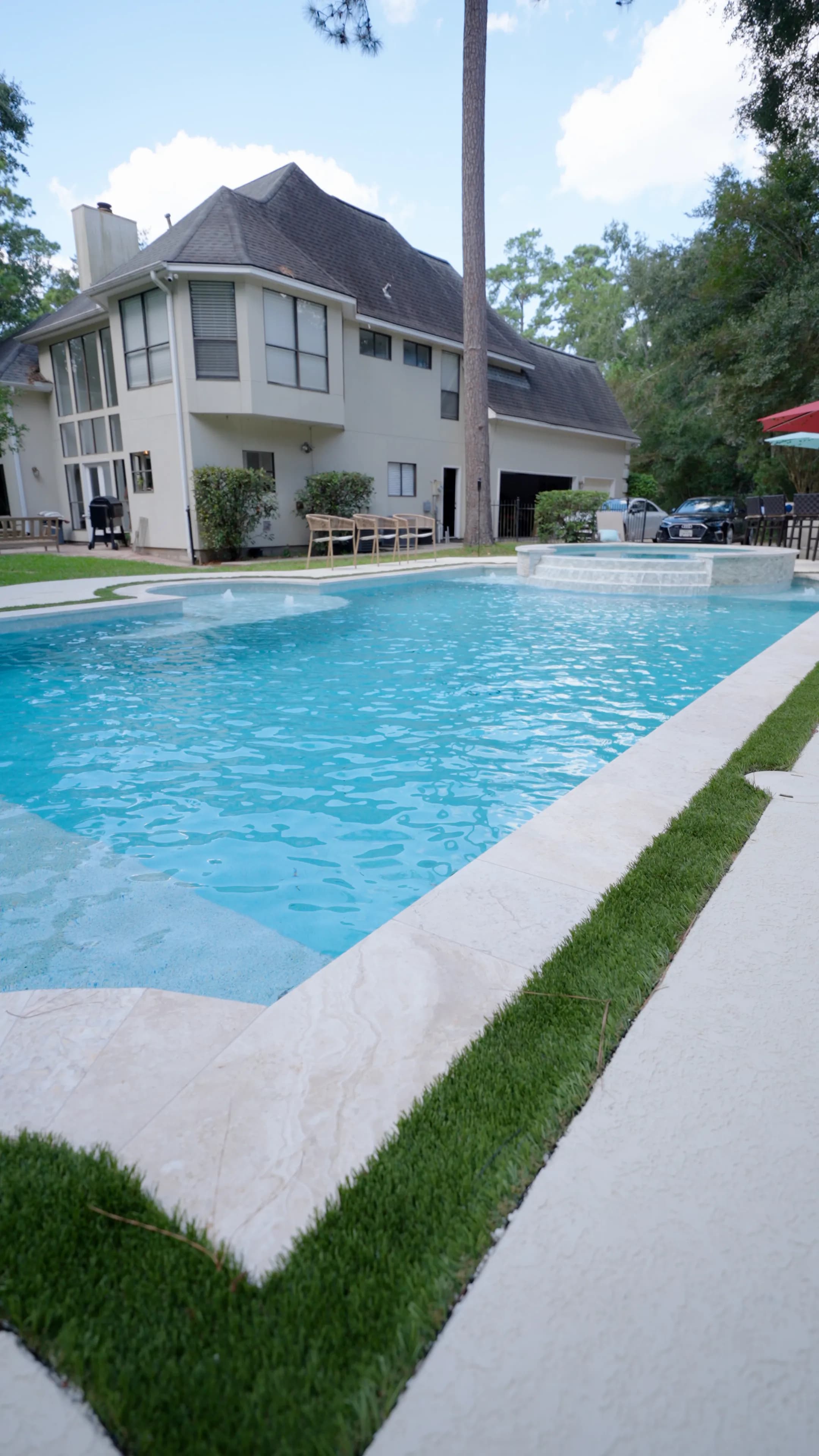
Plenty of Houston homeowners would love a pool and assume their yard is too small for one. Inner-loop lots, townhome courtyards, and patio homes in the suburbs often leave room for a patio and not much else. A plunge pool is built for exactly that situation: a real in-ground pool, sized to cool off and soak in, that leaves the rest of the yard usable.
This guide explains what a plunge pool is, the sizes and features that are common, how it compares with a full-size pool, what drives the price, and how permits work on a small lot.
What Is a Plunge Pool?
A plunge pool is a small in-ground pool designed for cooling off, soaking, and sitting in the water rather than swimming laps. It is usually deeper than its size suggests, so you can stand or sit submerged to the shoulders, and it typically has built-in steps and benches instead of a long shallow end.
You will also hear two related names. A cocktail pool is a small pool that is shallower, with bench seating around the edge, built for conversation. A spool is a spa-pool hybrid with jets and a heater, used as a hot tub in winter and a cool pool in summer. The names describe how the pool is used more than how it is built; all three can be the same custom gunite construction as a full-size pool.
Typical Sizes and Features
Most plunge pools fall somewhere between about 8 by 12 feet and 10 by 20 feet, and four to five and a half feet deep. Because a gunite shell is formed on site, the exact size is drawn around your lot's setbacks, easements, and trees rather than picked from a catalog. The question to start with is not "what size is standard" but "how many people do we want in the water at once, and where will they sit."
Features carry more weight in a small pool than a large one, because there is less water competing for attention:
- Built-in seating. Benches, a wide step, or a shallow ledge turn a small pool into a place to gather.
- A heater. A small volume of water heats quickly, which makes a plunge pool practical through Houston's cooler months and lets it stand in for a hot tub.
- Spa jets. Hydrotherapy jets in the benches make a heated plunge pool work as a spa.
- Staying cool in summer. In a Houston August, a small, sunny body of water warms up fast. Shade from the house or a pergola, a deeper shell, and running water features in the evening all help; true cold-plunge temperatures require dedicated chilling equipment, which is worth raising early in design.
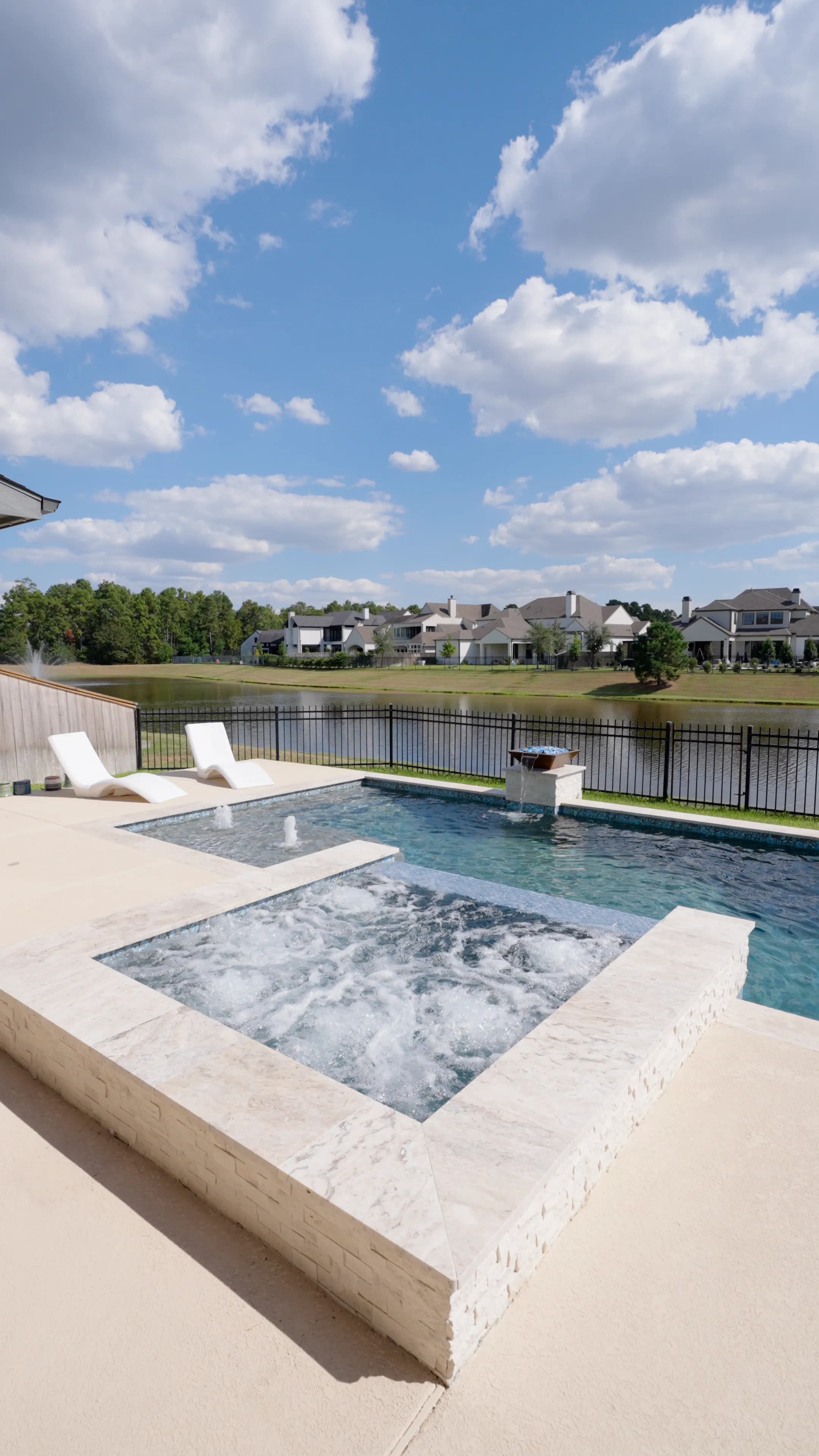
- Water features and lighting. A raised wall with a sheer descent, a bubbler on a ledge, LED lighting, and glass waterline tile give a compact pool a strong focal point from the house.
Thinking About a Project Like This?
Tell us about your backyard and what you have in mind. We will follow up to talk through options and next steps.
Plunge Pool vs. a Full-Size Pool
The right choice depends less on budget than on how you will use the water and how much yard you want left over.
Choose a plunge pool if your lot is small or narrow, you want the pool to sit alongside a patio, outdoor kitchen, or lawn rather than replace them, and your family mainly wants to cool off, soak, and entertain. A plunge pool also holds far less water, so it needs less energy and fewer chemicals to run.
Choose a full-size pool if you want to swim laps, have children who will want room to play and dive, or regularly host larger groups. If you have the room, keep in mind that a larger shell adds less to the price than its size suggests, for the reason explained in the next section. Our full-size custom pool construction page covers that path.
A middle option is to treat a plunge pool as a spa that happens to be large enough to cool off in. On a mid-size lot, that can give you year-round use without committing the whole yard to water.
Plunge Pool Cost Factors
The most common surprise with plunge pool cost is that the price does not shrink in proportion to the pool. Excavation equipment, steel, gunite, plumbing, an equipment pad, electrical service, a permit, and startup all have to happen whether the shell is small or large. That fixed base is why a plunge pool costs less in total than a big pool but more per square foot, and why general inground pool cost figures you find online, which mostly describe full-size pools, do not translate directly.
Beyond that base, these are the factors that move the number most:
- Access. On small lots, getting excavation equipment into the backyard is often the hardest part. Narrow side yards, fences, neighboring structures, and protected trees all shape how the pool is dug and built.
- Size and depth. More volume means more excavation, more steel, and more gunite, though less than you might expect at plunge-pool scale.
- Heating and jets. A heater, a spa blower or jet pump, and the plumbing for them are the biggest equipment decisions.
- Finish and tile. Plaster, quartz, or pebble interiors, and the tile at the waterline, change both the look and the price.
- Raised walls and water features. A raised spillover wall or sheer descent adds masonry and plumbing.
- Decking and the rest of the yard. On a small lot the patio around the pool matters as much as the water, and it is priced by area and material.
- Utilities and paperwork. The distance from the equipment pad to the electrical panel and gas meter, and any survey or engineering your jurisdiction requires, also appear on the quote.
Our plunge pool and cocktail pool page lists 2026 Houston-market planning ranges for small-format pools, and our guide to what a custom pool costs in Houston in 2026 shows how those compare with full-size builds. A real number starts with someone measuring your yard and the access route, and every Action Custom Pools quote is free and itemized.
Permits for a Plunge Pool
A plunge pool is permitted the same way as any other in-ground pool. Depending on your address, that means the City of Houston, Harris County, or a city with its own building department, plus HOA review in most master-planned communities. Small size does not exempt it.
On a small lot, setbacks matter more than anywhere else, because there is so little room to adjust the pool's position. Some independent cities, West University Place in particular, also require a survey and additional filings before a permit is issued. Our Houston and Harris County pool permit guide walks through each jurisdiction. We confirm what your lot allows before you commit to a design, and we handle the filings.
Is a Plunge Pool Right for Your Yard?
A few questions usually settle it:
- After setbacks and easements, how much of the yard is actually buildable?
- Can excavation equipment reach the backyard, and by what route?
- Do you want to swim, or mostly cool off, soak, and sit together?
- Will you use the pool in winter if it is heated?
- What else do you want in the yard: a patio, a lawn, an outdoor kitchen?
If the answers point to a small pool, the next step is a site visit to measure the lot and the access route. Request a free plunge pool quote or call (713) 670-6671.
Frequently Asked Questions
Thinking About a Project Like This?
Tell us about your backyard and what you have in mind. We will follow up to talk through options and next steps.
More From the Blog
Start Planning Your
Outdoor Project.
If you are ready to create a custom pool or outdoor space designed around the way you live, we would love to help.
Prefer to talk it through? Call (713) 670-6671